Buying A Festival-Focused Rental In Indio
May 14, 2026
May 14, 2026
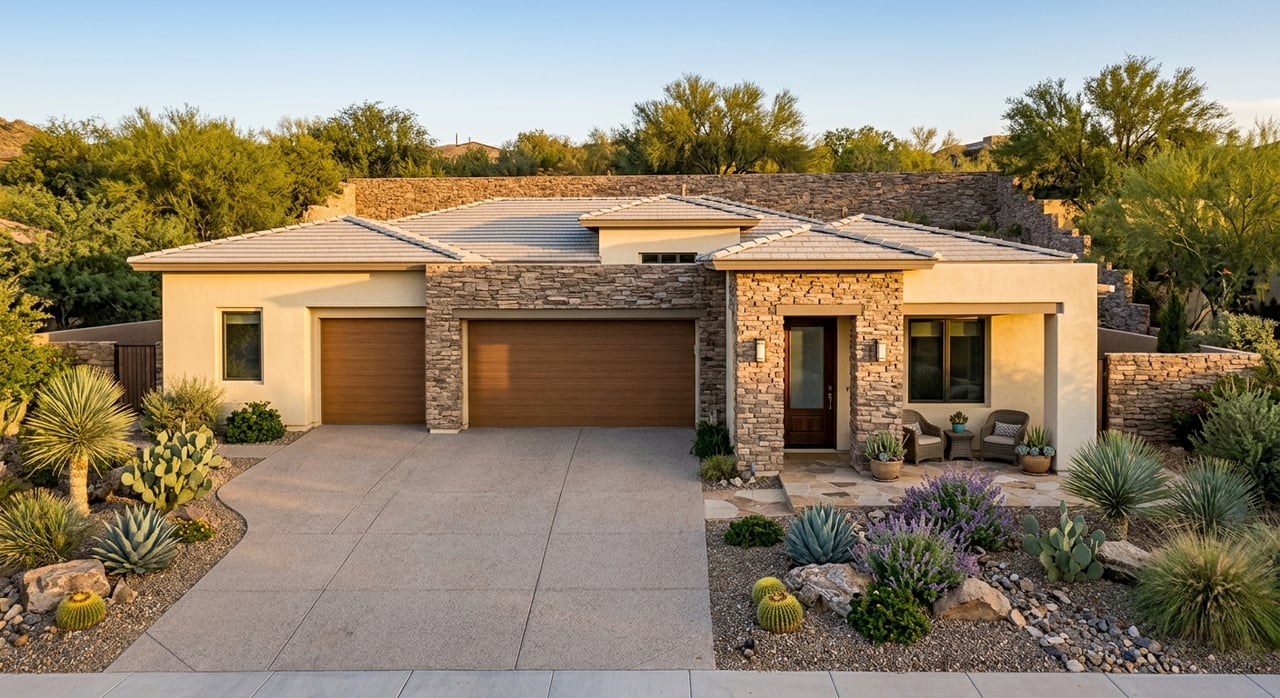
Buying a festival-focused rental in Indio can look exciting on paper, but the real opportunity is in the details. If you are drawn to the idea of owning a desert property that benefits from Coachella and Stagecoach demand, you also need a clear view of permits, seasonality, occupancy rules, and the kind of home that actually fits the market. This guide will help you understand what to watch before you buy so you can evaluate the opportunity with more confidence. Let’s dive in.
Indio sits at the center of one of the strongest event-driven rental stories in the Coachella Valley. Empire Polo Club hosts Coachella on April 10 to 12 and April 17 to 19 in 2026, followed by Stagecoach on April 24 to 26, creating a concentrated spring demand window that attracts buyers looking for short-term rental income.
That festival draw is part of a much bigger tourism engine. Greater Palm Springs reported 14.4 million visitors and $9 billion in total economic impact in 2023, and a Tourism Economics report found that Coachella Valley short-term vacation rentals generated $906.9 million in direct visitor spending in 2024. Indio alone accounted for $184.9 million of that total, which helps explain why the city remains on many buyers’ radar.
Demand also tends to be group-oriented, which matters when you are choosing the right property. Recent reporting showed Airbnb searches around Coachella doubled year over year, searches for Indio and nearby festival cities rose more than 80%, and more than 70% of booked nights in surrounding festival cities were for group travel. In practical terms, that often means larger homes have a stronger fit than small condos or compact units.
Before you focus on revenue, start with compliance. In Indio, you need an active short-term rental permit before you advertise or rent the property, and the city combines the business license and short-term rental permit into one document.
The annual permit fee is $1,633. Owners must also register for and remit a 13% Transient Occupancy Tax on residential short-term rentals, plus a 1% TBID assessment on gross rental revenue for stays of 27 days or less. Those costs should be built into your underwriting from the start.
One of the biggest mistakes buyers make is assuming they can take over the seller’s permit. In Indio, the permit does not transfer with the sale. A change in ownership makes the existing permit null and void, so you should plan on applying for a new permit after closing rather than counting on uninterrupted operating rights.
If the home is in an HOA, review the governing documents early. Indio requires a board letter confirming that the CC&Rs and association rules do not prohibit short-term rentals.
If the HOA prohibits STR use, the city will not issue a permit. That means HOA review is not just a nice extra step. It is one of the first deal filters you should apply before you get too far into escrow.
Insurance is part of this review process as well. Indio requires proof of at least $1 million in liability coverage unless the booking platform provides equal or greater coverage.
Festival demand may be strong, but Indio’s occupancy and conduct rules are strict. Overnight occupancy cannot exceed four people plus two per bedroom, which means your marketing, pricing, and sleeping setup all need to stay aligned with the legal bedroom count.
Gatherings are also regulated by parcel size and guest count. Parcels of 14,500 square feet or larger may host gatherings up to 40 people, while smaller lots can trigger special-event permit requirements for certain guest counts. If your business plan depends on oversize groups, the property may not support it.
The renter must be at least 21 years old, and a responsible person must be present during the rental period. The owner or local contact must also be available 24 hours a day, seven days a week, with response times of 15 minutes by phone or text and 45 minutes in person when needed.
The homes that work best for festival guests are not always the homes that work best under city rules. Amplified sound cannot be audible beyond the property line, outdoor noise is restricted during quiet hours, and the property must remain residential in character.
Indio also prohibits renting ADUs, JADUs, RVs, tents, garages, sheds, tree houses, or other non-habitable structures as short-term rentals. The city also bans STR compounds and commercial activities such as weddings or large parties unless a special event permit is obtained.
Parking matters more than many buyers expect. Because festival bookings often involve groups, you should confirm the parcel can legally and practically handle the number of vehicles your target guest count is likely to bring.
Indio is not a one-size-fits-all short-term rental market. Third-party tracking sources differ on citywide averages, which is a good reminder to rely on property-specific comps rather than broad averages alone.
As of April 2026, one market snapshot showed 1,337 active listings, a $604 average nightly rate, 34.2% occupancy, and $61,446 in annual revenue. Another showed 968 active listings, a $489 average daily rate, 36% occupancy, and $50,771 in annual revenue. The exact figures vary, but both data sets point to the same conclusion: this is a seasonal market where the right house matters a lot.
Size has a major impact on revenue potential. Rabbu’s market data shows that 4-bedroom homes average about $53,951 annually, 5-bedroom homes about $82,069, and 6-plus-bedroom homes about $200,403. Larger homes can offer more upside for festival groups, though they also come with more operational complexity.
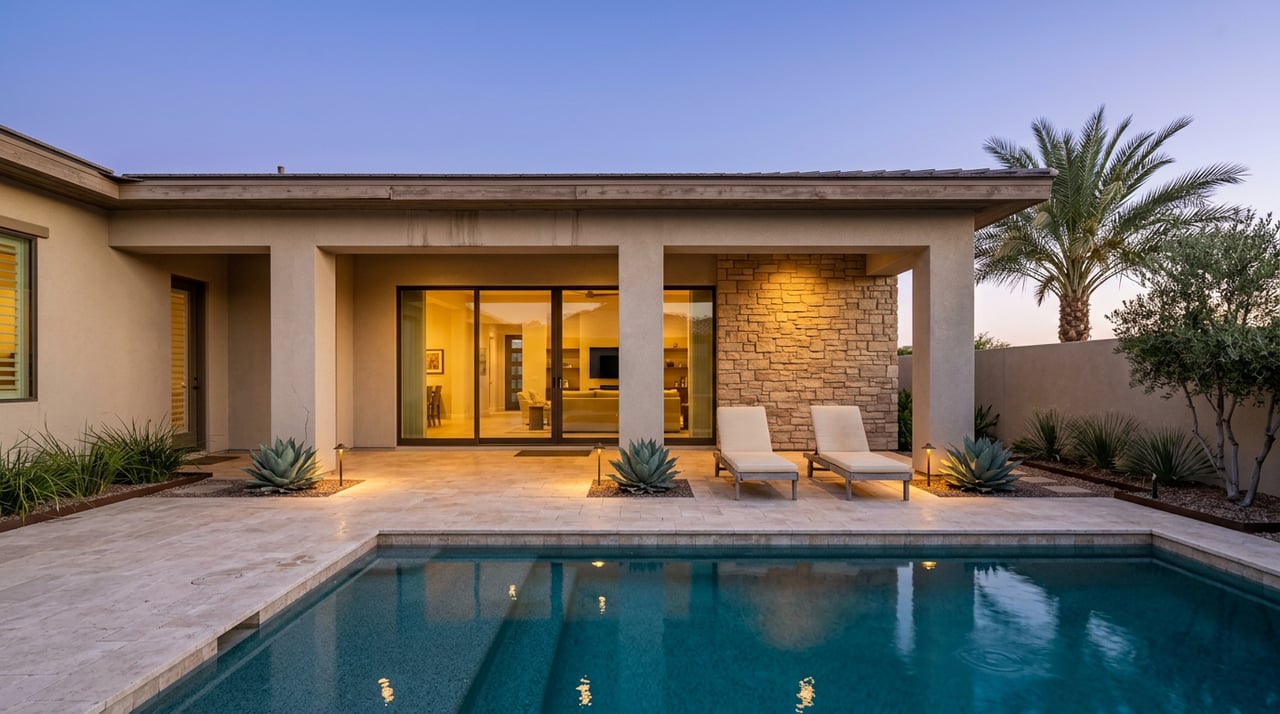
Amenity expectations are also clear. Kitchens, washers, dryers, and parking are common baseline features, while pools, hot tubs, BBQ grills, and backyard spaces are also very common. The practical sweet spot is often a home with strong parking, flexible sleeping arrangements, and outdoor areas that feel elevated without encouraging code issues.
If you are evaluating a festival-focused rental in Indio, seasonality should be at the center of your financial model. Revenue is not spread evenly throughout the year.
Market data shows April peaking at $8,352 in average monthly revenue, while September drops to $2,712. The February-to-April stretch tends to produce the strongest share of annual income, which means spring pricing can carry a large part of your return profile.
That makes conservative underwriting especially important. Rather than assuming smooth monthly cash flow, stress-test the slower summer and early-fall months and decide whether the property still works when peak festival demand is removed from the equation.
A festival-focused purchase needs more than a quick revenue estimate. You should confirm the legal bedroom count against city and county records and verify that no unpermitted bedroom conversions exist.
This step matters because Indio verifies bedrooms using County Assessor and city building records during the permit process. If the home is marketed as having more sleeping capacity than its legal bedroom count supports, your permit and occupancy plan may not line up.
You should also confirm the permit path, tax obligations, insurance requirements, and HOA approval before closing. Indio inspects new permits, and the city makes clear that permit approvals do not create vested property rights, so buyers should avoid assuming future flexibility that is not already supported by the code.
Indio can make sense for buyers who want a festival-anchored short-term rental strategy and are comfortable with a hands-on, compliance-heavy ownership model. It is generally a better fit for buyers who see the property as an operating business tied to spring demand, not a passive second home that occasionally earns income.
For the right buyer, the upside is clear. Indio benefits from major event demand, strong group travel patterns, and a broader tourism base across Greater Palm Springs. But the best outcomes usually come from choosing the right property, understanding the rules in advance, and buying with a realistic plan for management and seasonality.
If you are considering an Indio purchase and want a concierge-level perspective on property fit, lifestyle value, and local market context, connect with Scott James Properties to schedule a consultation.
Stay up to date on the latest real estate trends.
We pride ourselves in providing personalized solutions that bring our clients closer to their dream properties and enhance their long-term wealth. Contact us today to find out how we can be of assistance to you!