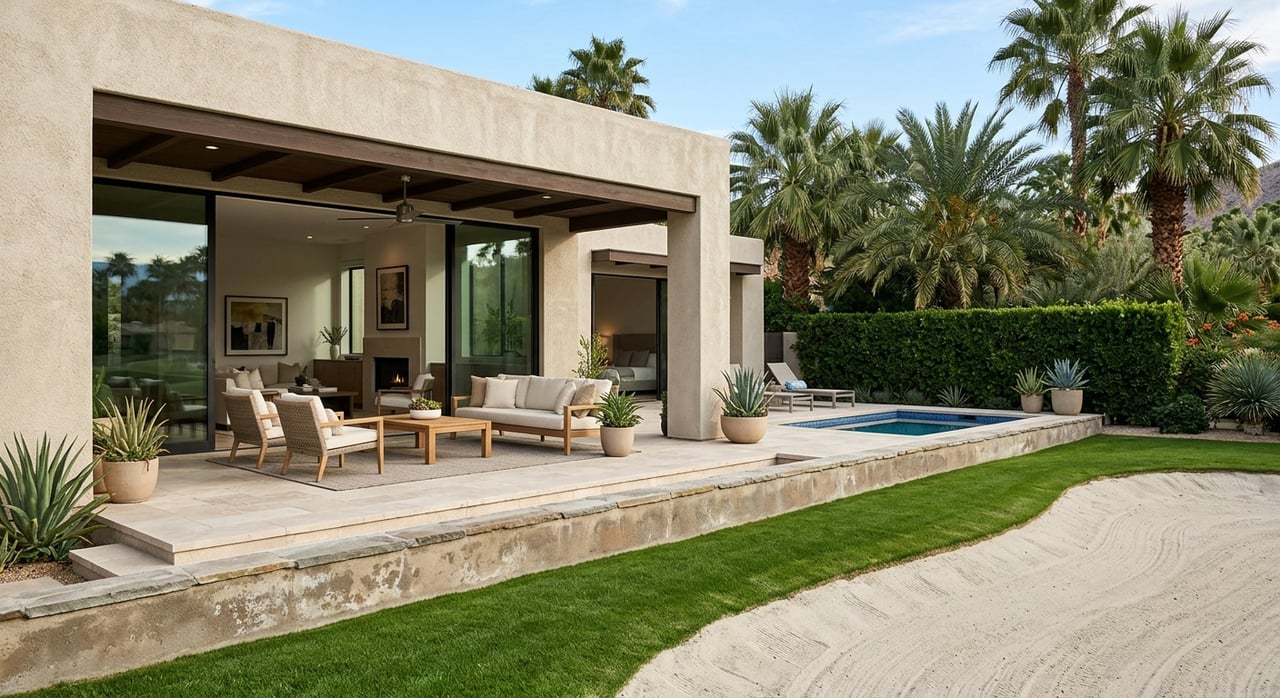
Understanding Golf Community Living In La Quinta
May 21, 2026
May 21, 2026
If you are thinking about buying in a La Quinta golf community, the biggest surprise may not be the home price. It is often the monthly structure behind the lifestyle. In a city with 25 golf courses and a strong seasonal population, golf community living can look very different from one gate to the next. This guide will help you understand how the main models work in La Quinta, what costs to compare, and what to watch for before you buy. Let’s dive in.
La Quinta has a deep golf identity. According to the city’s history page, it has 25 golf courses, which means buyers can choose from a wide range of community styles and club structures.
That variety is a plus, but it also means you need to look beyond the brochure. Some communities separate the HOA from the club. Others include social or sports access with ownership, while golf stays optional.
In La Quinta golf communities, the home is only part of the financial picture. What matters just as much is how the community splits costs between the HOA and the club.
In general, HOA dues cover neighborhood operations like gates, common-area landscaping, security, pools, and shared services. Club dues or membership fees usually cover golf, dining, fitness, racquet sports, and social programming.
That distinction matters because two homes with similar prices can carry very different monthly obligations. One may include a built-in sports membership, while another may require separate dues if you want club access.
California disclosure rules are helpful here. During an HOA sale, buyers are supposed to receive governing documents, the latest HOA assessment and fee statement, budget and reserve materials, and any disclosed rental restrictions before transfer.
Not all golf communities in La Quinta are built the same. Here is how several well-known community models compare.
PGA WEST uses a clearly separated structure. Its residential HOA states that homeownership does not include club membership or access to the private courses, and no portion of HOA dues supports golf operations.
For many buyers, that creates flexibility. You can buy for the address, setting, and neighborhood experience first, then decide whether separate club access makes sense for your lifestyle and budget.
Rancho La Quinta follows a semi-bundled model. The association states that Master and Casitas homeowners are members of the Sports & Fitness Center, and that those membership dues are included in the monthly homeowner fee.
Golf is separate. The club reports that its golf membership is waitlist active, with a $65,000 initiation fee and $1,800 in monthly dues.
This setup can work well if you want a full club lifestyle even when golf is not your only focus. It also helps explain why golf access feels more exclusive here, since the club states the public cannot play without sponsorship and guests must follow club rules.
La Quinta Country Club is a member-owned private club, and it states that membership and homeownership are independent of each other. The club offers Regular Golf, Junior Executive, and Social memberships.
That gives buyers choice. If you want a traditional private-club setting without a mandatory golf structure tied to the house, this kind of arrangement may feel more flexible.
Andalusia blends bundled social and wellness access with separate golf. The club states that each owner receives one Sports Club membership with homeownership, and that sports dues are included in HOA dues.
That membership covers amenities such as tennis, pool and spa, pickleball, fitness, wellness, bocce, hiking, biking, dining, and social events. Golf remains separate, with resident golf pricing and dues posted by the club.
For buyers, this often means the day-to-day lifestyle is built in, while serious golf remains an extra decision. Andalusia also advertises walk-on golf access without tee times for golf members, which may matter if you plan to play often.
Mountain View requires every home purchase to include a Social Membership. That tier includes dining, club events, fitness, tennis, pickleball, bocce, and pool and spa access.
Golf is a separate tier. The upside is easy access to a country-club lifestyle from day one. The trade-off is that you pay for that social structure whether you use it heavily or not.
Trilogy offers a lower-commitment hybrid model. Its golf club is open to the public, while residents receive tee-time access up to 32 days in advance and a 20 percent resident discount.
The community also offers annual golf options available only to Trilogy residents. For buyers who want golf as an amenity rather than a full private-club commitment, this model can feel more approachable.
A smart golf community search in La Quinta should go beyond price per square foot. You want to compare the full ownership picture.
Ask for the complete monthly burden, not just HOA dues. In practice, that can include:
These details can shape affordability far more than the list price suggests. They also affect how comfortable the home feels as a second home, seasonal property, or long-term hold.
The right setup depends on how you plan to live. A mandatory social membership may be great if you want regular fitness, dining, and events. An optional club model may suit you better if you want flexibility and lower fixed costs.
Golf buyers should also ask a practical question: do you want private access, bundled lifestyle access, or public-play convenience with resident perks? La Quinta offers all three.
If you are buying a second home, rental restrictions deserve close attention. Rancho La Quinta, for example, prohibits rentals of under 30 days.
California HOA disclosure law specifically requires rental or leasing restrictions to be disclosed during the sale process. If you may rent the property part-time, confirm the rules early so your ownership plan matches the community framework.
The disclosure package is not busywork. Budget and reserve materials can help you understand how the association is planning for repairs, upkeep, and long-term obligations.
That matters in any community, but especially in amenity-rich neighborhoods where shared infrastructure and landscaping are a major part of the experience. A polished entrance and strong common-area maintenance are great, but you want to know how those standards are funded.
In golf communities, not every location carries the same resale story. Research cited in the report suggests value premiums are strongest for homes with true frontage or meaningful course views, especially in more exclusive golf settings.
Simple proximity without a view is less consistently rewarded. In other words, being near a course is not always the same as living on it.
That is important when you compare homes inside the same community. A fairway-facing property, a lake-and-course view, and an interior home with no visual connection to the course may perform differently over time, even when the amenities are shared.
The same research also notes that golf-course closures can reduce nearby property values. That makes the long-term health of the club or course operation part of the buying decision, not just the lifestyle appeal today.
The best La Quinta golf community for you depends on what you want the property to do. Some buyers want a lock-and-leave second home with easy amenities. Others want serious golf access, a traditional club atmosphere, or flexibility without mandatory golf dues.
A helpful way to think about it is this:
For resale, keep your future buyer in mind too. A mandatory structure can support exclusivity, but it may narrow the buyer pool. A more flexible structure may appeal to a broader audience, especially among second-home buyers.
On paper, many La Quinta golf communities sound similar. In reality, the ownership experience can differ in meaningful ways once you compare dues, membership rights, rental limits, and the value of the actual view.
That is where local market context helps. If you are comparing a luxury condo in one gated community to a custom home in another, the lifestyle story may be obvious, but the cost structure and resale factors often need a closer look.
Working with a team that understands La Quinta’s golf community landscape can help you weigh both the emotional side of the purchase and the practical side. That way, you can choose a property that fits how you want to live now and how you may want to use it later.
If you are exploring golf community homes in La Quinta or thinking about how to position one for sale, Scott James Properties can help you navigate the lifestyle, the numbers, and the strategy with a concierge-level approach.
Stay up to date on the latest real estate trends.
We pride ourselves in providing personalized solutions that bring our clients closer to their dream properties and enhance their long-term wealth. Contact us today to find out how we can be of assistance to you!